

This past Tuesday, our high school reunion committee met at a local restaurant to celebrate a job well done. It is kind of a pricey place, but we decided we “deserved it” after pulling off yet another, um, ‘lituation.’
You can decide which is the lamest: my looking up a contemporary slang term for a successful party OR the word itself. A lituation? Obviously, or perhaps not, this is a portmanteau of “lit,” meaning exciting or fun, and situation. Regardless, it is still a reach, and I hope it doesn’t become commonplace.
We had a great time at dinner, or at least I did. Furthermore, so did seemingly everyone else in the place, and it was packed. I mean, it was an off Tuesday night at the end of August, and one of the more expensive restaurants in town was booked solid.
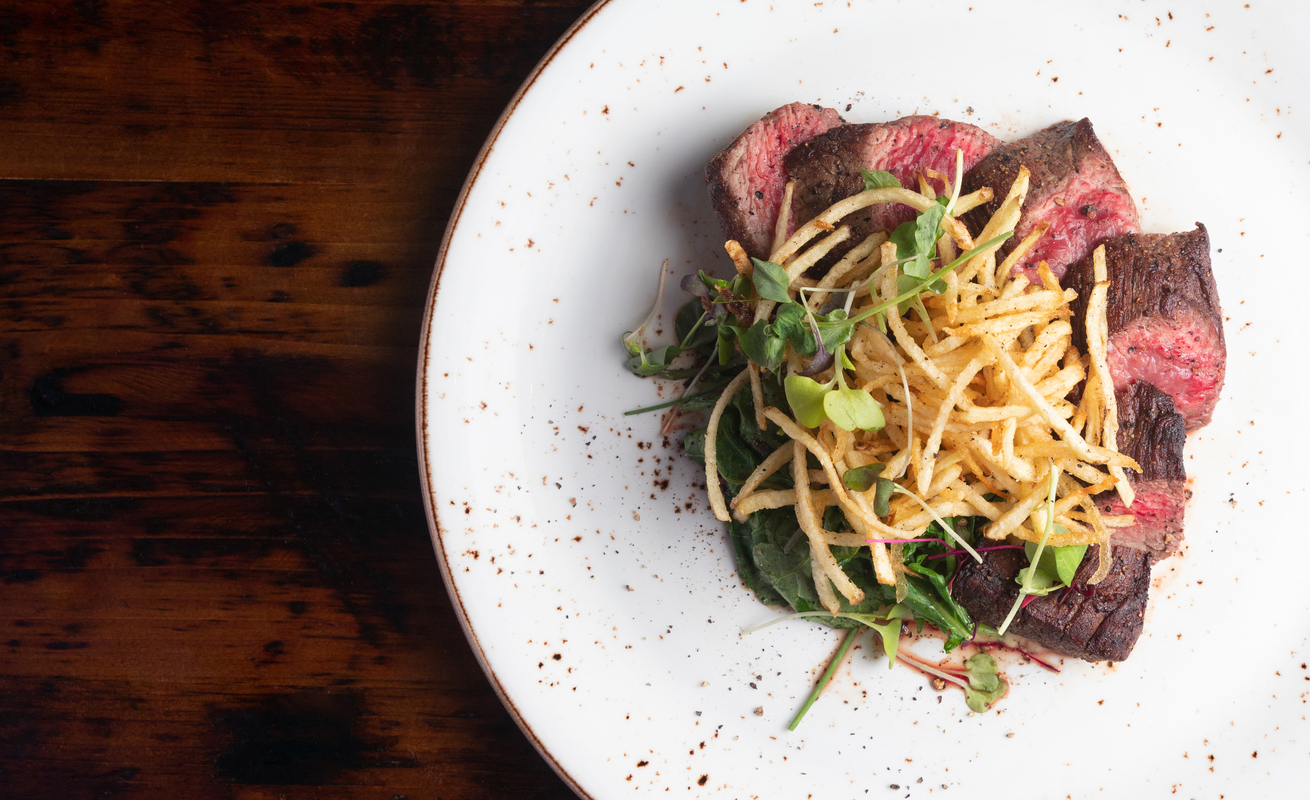
The service was fantastic, as it always is. So, too, was the Caesar salad, which I would put up against any of its type anywhere. The wagyu beef appetizer was literally “melt-in-your-mouth” good, and my entrée was just okay, if that.
By that I mean it wasn’t so bad I was going to send it back, and potentially put a damper on the good time the table was having. Without belaboring the issue, let me just say it was unevenly cooked and surprisingly small given the price. Some cuts were medium to almost medium-well, and others were effectively “blue.” It was nuts.
Now that I think about it, it is kind of impressive the varying ‘temperatures’ there were in that smallish piece of steak. Each bite, and there weren’t that many, was a whole new experience. It was like several different entrees in one!
What a bargain!
Unfortunately, it did not seem as though I was alone. Several people in the party ordered the red snapper, and each received a, shall we say, rather polite piece of fish. Extremely polite. Another ordered the NY strip, and pronounced it fine, as did the one who got the ribeye. Only the person who ordered the veal chop got what I would call a substantial cut of meat.
Not surprisingly, he was also the only one who asked for a to-go box. Shoot, there wasn’t anything left on the rest of our plates, that is except for a rather large bone on mine. I suppose that was what I was paying for all along.
Although it might seem like it, the purpose of this newsletter isn’t to write a restaurant review. No, it is to perhaps illustrate one way that businesses and consumers can respond when costs, prices and perceived value change. That and its impact on microeconomics.
You see, in my way of thinking, one person at a table of seven getting a ‘smaller than advertised’ portion is that particular person’s bum luck. Stuff happens. Two people getting one is kind of annoying. Three might mean the ‘kitchen is in the weeds.’ However, six out of seven is probably a trend—or enough to get this economist wondering what was going on.
Not surprisingly, I thought about this on the way back to my house. How the portion seemed smaller even though the menu price hadn’t changed.
Unfortunately, I had seen this sort of thing happen at a restaurant that was previously my go-to place, regardless of price.
For years, I would ordinarily order the ‘steak frites,’ which was a pretty large portion of red meat and a copious amount of excellent French fries. They took up the whole plate. Then, everything changed. Everything, that is, but the menu price.
Instead of the steak and frites taking up the entire dish, the entrée came with a side salad which took up about one-third of the plate, if not more than that. While I wasn’t thrilled, I assumed the kitchen had simply run low on the good stuff, and was doing the best with what they had on hand. Again, stuff happens.
However, the same thing happened the next time I ordered it and the time after that. The third time is the charm, and I moved on to another entrée. Unfortunately, it seemed the restaurant had effectively done the same sort of thing to all of my favorites.
Don’t get me wrong. The food was still tasty, and the service was solid, as always. However, in my eyes, there was a somewhat substantial reduction in the perceived value of the restaurant as a whole. As a result, it is no longer my ‘go-to’ place. While my wife and I still occasionally go there, it has been more than a few months since our last visit.
But as for last week’s restaurant? Gosh, I don’t know. You see, it was already hitting the upper range of my comfort zone in terms of prices. But as a special night out celebrating something? Sure, it was that kind of place, and everyone has their own.
Now, the thing about that type of establishment is that it doesn’t take much to knock them off the pedestal. Especially when there are any number of alternatives or substitutes available. If this place was the only game in town to get a decent steak or piece of snapper, you know, I might just have to suck it up and deal with it.
However, there is no shortage of such joints in the Birmingham area. In fact, I don’t see how ‘we’ support them all. Besides, I can grill a pretty mean filet or strip steak on my patio. All of it. That shrinks the margin for error to almost nothing. For me, there is simply no room for anything less than, well, excellence when you charge what they charge.
So, when I am paying what feels like top-decile prices for anything, I expect top-decile quality. When I pay for median, I expect median. When I pay for eighth decile, I am happy with average. However, when I am paying for top decile and receive third or fourth, maybe even fifth in this instance, I tend to move on to the next one.
To that end, the meal I had last week was better than any I have ever had at, say, a Golden Corral or Shoney’s or Lucky China Buffet or some such place. Not that I eat at those places all that frequently, but I have. We all have. To that end, there are two types of people in the world: (1) those who have been to an ‘all you can eat’ buffet and admit it, and (2) those who have been to said buffet and claim they haven’t.
In the end, that is the thing about economics. Every menu, every meal, every empty water glass on the table can factor into your decisions. So, too, can the availability of alternatives. To be sure, it might not seem like economics when you swear you won’t go back to ‘such and such’ place, but it is.
That, my friends, is how an undersized and strangely prepared cut of beef turns into an economics newsletter which has taken up the last 5-7 minutes of your life.
Thank you for your continued support. As always, I hope this newsletter finds you and your family well. May your blessings outweigh your sorrows on this and every day. Also, please be sure to tune into our podcast, Trading Perspectives, which is available on every platform.

John Norris
Chief Investment Officer
About Common Cents:
Please note, nothing in this newsletter should be considered or otherwise construed as an offer to buy or sell investment services or securities of any type. Any individual action you might take from reading this newsletter is at your own risk. My opinion, as well as those of our Investment Committee, is subject to change without notice. The opinions expressed herein are not necessarily those of the rest of the associates and/or shareholders of Oakworth Capital Bank or the official position of the company itself.
Opinions and forward-looking statements are subject to change without notice and may not come to pass. Past performance is not indicative of future results. References to market indices are for illustrative purposes only. Index performance does not reflect the deduction of fees or expenses, and individuals cannot invest directly in an index. Political and geopolitical events are referenced for general context and do not represent a recommendation or prediction regarding any specific investment outcome. Links to third party articles are provided for informational purposes only. Oakworth Asset Management LLC does not control, endorse or adopt the content, opinions or recommendations expressed on third party websites. Such content may be dated and may not reflect current market conditions. Third party information is believed to be reliable but has not been independently verified. Readers should evaluate the information independently. Any reference to specific securities is provided for informational and illustrative purposes only and should not be considered a recommendation to buy, sell, or hold any particular investment. It should not be assumed that any such securities discussed were or will be profitable.
About Oakworth:
Oakworth Capital Bank, Member FDIC, Equal Housing Lender, provides commercial and private banking, wealth management and advisory services. Advisory Services, including investment management and financial planning, are offered through Oakworth Asset Management LLC, a registered investment advisor. Oakworth Asset Management LLC is owned by Oakworth Capital Bank. Investment products and services offered via Oakworth Asset Management LLC are independent of the products and services offered by Oakworth Capital Bank, and are not FDIC insured, may lose value, have no bank guarantee, and are not insured by any federal or state government agency. Because of the ownership relationship and involvement by Oakworth Asset Management LLC associates with Oakworth Capital Bank, there exists a conflict of interest to the extent that either party recommends the services of the other. For additional information about Oakworth Asset Management LLC, including its services and fees, visit adviserinfo.sec.gov.