

Listen to the full episode, here.
John Norris (00:30):
Well, hello again, everybody. This is John Norris at Trading Perspectives. As always, we have our good friend, Chris Cooper. Chris, what’s up?
Chris Cooper (00:36):
Hey, John. How are you doing?
John Norris (00:38):
Chris, I’m doing fantastic, although I’m beginning to wonder whether or not I should be because recently I’ve had no fewer than two or three people come and ask me, “Why is the government putting out these emergency preparedness kits?” And I went online. I didn’t know what they were talking about, truthfully. I went online and I typed in, “Why are we in an emergency?” Or I forget what I Googled.
(00:58):
And sure enough, it seems as though there have been a number of governments, the United States, the UK and others, all come out with some measure of updating of their emergency preparedness plan, something along those lines. “You need to have this, that, and the other thing.” And it does seem kind of weird. I mean, why are we doing this now? And particularly with all the weird stuff that’s going on in the world, all the turmoil in the Middle East, all the riots in Europe, the midterm elections that just passed in the United States, all the strife that seems to be here. Why are our friends at the government telling us to worry about emergencies?
(01:36):
And so that got me to thinking about what type of emergencies scare us all the most. And so I got to tell you, I’ve never really been a doomsday person. I’ve never been a doomsday prepper. But there was a book that I read some years ago. It’s called World War Z by a guy named Max Brooks. It’s not for everyone. It’s about what happens after the zombie apocalypse. And it’s a really good book. There was a movie with Brad Pitt. I don’t see how they did a movie adaptation of the book, I mean, really, but it was about as good as can be expected. It’s actually a pretty entertaining movie.
(02:14):
I think that type of emergency scares me the most. The undead walking around the earth, that terrifies me. The rest of it, I don’t know. I mean, I guess I don’t worry about the future perhaps as much as I should. I don’t know if that’s a good or bad thing. I think maybe it’s better than bad, I guess, to not have to worry about it. But for me, what kind of emergency scares me the most? I guess it’s truthfully not being in control of something and the worst-case scenario. And nothing could be more terrifying than zombies. So for me, that kind of gets at it, but I don’t think the government’s really trying to tell us to be prepared for zombies. I think they’re probably… I don’t know, what happens if public institutions collapse or there’s martial law or some other sort of significant strife or, I don’t know, I mean, maybe an escalation of the situation in the Middle East? I guess maybe that’d be terrifying. What do you think?
Chris Cooper (03:13):
Well, yeah, I mean, first of all, no matter if there’s governmental warnings providing really, like you’re hinting at, no real context whatsoever, it’s probably just a good idea for everyone to have some sort of supplies and maybe some non-perishable foods on hand at all times. Weather disruptions, power outages, whatever it may be, just be smart and look after your family. It’s like the Scouts always taught me, John. Did I ever tell you I was in the Boy Scouts? I was in the Boy Scouts.
John Norris (03:41):
Learning something new about you every day.
Chris Cooper (03:42):
I was in the Boy Scouts, and this is one of their famous logos or slogans, “Always be prepared.”
John Norris (03:48):
Well, I knew that.
Chris Cooper (03:51):
That’s one thing I’ve taken with me.
John Norris (03:52):
That’s the one thing you took with you?
Chris Cooper (03:55):
That’s the one thing.
John Norris (03:56):
The absolute one thing. Not any fingers together and all that stuff?
Chris Cooper (03:57):
Fingers together, “I promise to do my best absolutely always.” Always be prepared, that’s what I took with me.
John Norris (04:05):
Well, would you say you are? More on that later.
Chris Cooper (04:08):
More so this week than last week after the warnings. This weekend, maybe I bought some canned food. But no, I think really a lot of this is probably AI-related.
John Norris (04:19):
You think so?
Chris Cooper (04:20):
Probably AI-related, probably around the power grid, threats that maybe the UK government, the US government has maybe seen terrorist organizations maybe getting their hands on some kind of AI frontier model or something that can attack our power grids. And as you know, I mean, look, we have it pretty comfortably these days, John.
John Norris (04:42):
Really?
Chris Cooper (04:42):
It’s really quite nice what we can do these days.
John Norris (04:46):
All of our basic needs are met and we get to sit in an air-conditioned house. I mean, what are you talking about?
Chris Cooper (04:51):
All of them. So it’s like if the power goes out for a day, two, three, four, five days-
John Norris (04:57):
Can you imagine?
Chris Cooper (04:57):
Can you imagine?
John Norris (04:58):
That’s awful.
Chris Cooper (04:59):
It’d be terrible. People would die, honestly. So I think a lot of that is centered around the power grid and AI disruptions in that space.
John Norris (05:10):
I was talking about this with TJ Rock, who’s the head of our technology effort here at Oakworth, he and Dave Driscoll, about this, just emergency preparedness and what have you. And we started talking about AI and disruptions to the grid and to other things due to terrorists, just like you said. And frankly, up until about an hour and a half ago, I mean, I hadn’t thought about it too much. If there had been some sort of emergencies, I wasn’t necessarily thinking about someone doing AI to get into our power grid, although it’s logical. I was thinking more along the lines of, I mean, why are we going through all this chicanery at TSA check lines when all you need to do is-
Chris Cooper (05:52):
All it takes, yeah.
John Norris (05:53):
Literally, it takes a toy drone with some nice-size plastic explosion caps or whatever they are, blasting caps, and fly that into a pipeline. I’m not trying to give anyone ideas. Please don’t. But going through and patting me down, I was in a couple airline flights over the week and they pat me down and all that stuff. I’m not taking down a plane. Come on, you can barely walk onto it.
(06:27):
But when you really think about it, yeah, it’s kind of surprising that we haven’t had more things like that. And I don’t necessarily think it’s because the TSA’s doing such a great job. I just think that they haven’t gotten around to it. I mean, truthfully, I think it’s out there. I think it’s coming. I think other people think it’s coming. I mean, that there’d be some kind of cyber attack on something that’s a little bit more significant than what we’ve seen in the past, and maybe some drone attacks. And I don’t think that’s a if. I think that’s just a question of when.
Chris Cooper (06:59):
When, yeah.
John Norris (07:01):
And so that’s what I think our governments are hinting at there. So I would say, are they truly being proactive? Are they being dutiful? I don’t know. I mean, I would tell you, I mean, I want people to shoot straight with me. And if someone goes, “Hey, listen, we’re doing everything we can to keep things safe,” which I’m not really sure if they are, but, “We’re doing everything we can to keep things safe, but just in case, it’s not a bad idea.” And so as opposed to a blah, blah, blah, it’s nice to have, all that.
(07:27):
So we mentioned that the possibilities are probably AI-related, the technology, cyber attacks, maybe even drone attacks. Why get a 747 or whatever they’re flying these days and fly it into a building when you can go to the toy store and get some drones, put some blasting caps on them, and fly themselves? That way you don’t have to be a martyr. I don’t know. Maybe that’s part of it.
(07:55):
But you’ve seen some of the recommendations, and this we’ll probably spend a little bit more time on this. Are the recommendations for being prepared, are they anywhere near sufficient?
Chris Cooper (08:06):
Probably for the governments. I mean, I don’t think they would be telling us to go stockpile a whole bunch of non-perishable food items and supplies without themselves being fully prepared first.
John Norris (08:16):
You think maybe there’s some sort of bunkers somewhere underneath the Greenbrier in West Virginia, out in a mountain in Colorado where the fat cats actually got a lot of really good food? You don’t think that’s the case?
Chris Cooper (08:29):
It might be the ballroom. I don’t know.
John Norris (08:31):
It could be underneath the ballroom, all that stuff.
(08:33):
Okay, guys, this is where I’m actually going to have to start reading some stuff. I pulled this off of the UK government’s website. It’s the Be Ready campaign, which is relatively new to them. And it’s got a Be Ready checklist and it has a call 999 if you or someone else is in immediate danger. You can go on and get this beready.campaign.gov.uk/bereadyforemergencies. So this is what they are saying. First of all, see what you have already. That’s their first step.
Chris Cooper (09:02):
Logical.
John Norris (09:04):
That is. Plan for your household, build it gradually, check it regularly, and connect with your community. Talk to your neighbors about what extra support you might be able to share during an outage and swap contact details. All right, I don’t know. I mean, if it came down to that, I’m just like, “Hey, man, you got any stuff I can have in there?”
Chris Cooper (09:28):
Hey, I’m totally ill-prepared.
John Norris (09:31):
Hey, Chris.
Chris Cooper (09:31):
Don’t come to me.
John Norris (09:32):
Hey, Chris, it’s kind of like The Ant and the Grasshopper, that old story.
(09:34):
So here are some of the things, items to be checked off. Water. Makes sense. Bottled water for three days. Three liters per person per day for drinking. More would be needed for other tasks, such as cooking and washing. So a liter is a little over a quarter, I think. So I need about three quarts of water. Okay, that makes sense.
(09:53):
Food. Non-perishable food for three days. Food with a long shelf life that doesn’t need refrigerating or cooking, tinned meat, fish, or vegetables, dried fruit, and nuts. It’s best to buy food you’d usually eat. I mean, three days?
Chris Cooper (10:07):
I would agree.
John Norris (10:07):
Is that enough? Yeah. I mean, is that enough, though?
Chris Cooper (10:09):
Hey, I could fast for three days. I’m making it just fine.
John Norris (10:13):
Look at you. Look at you, Mr. Universe over here.
Chris Cooper (10:15):
Some rice, some lentils. Make sense.
John Norris (10:18):
Rice, lentils. Put it in your bottled water, heat it up.
Chris Cooper (10:21):
There you go.
John Norris (10:21):
There you have it.
(10:22):
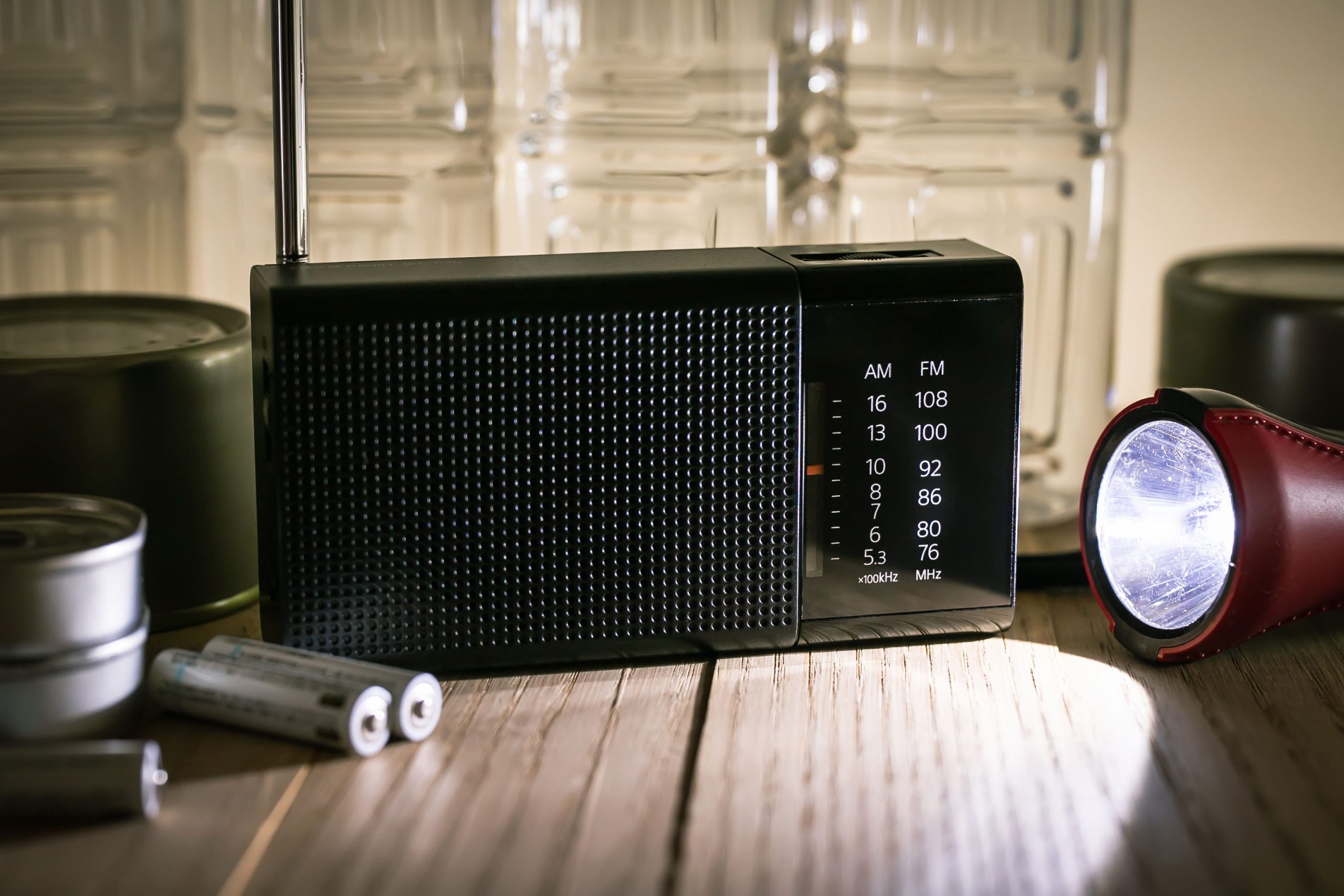
Hygiene. Hand sanitizer, wet wipes, and bathroom products. Light and warmth. Torch. That’s a flashlight.
Chris Cooper (10:31):
Torch. Okay, that’s what we can call it.
John Norris (10:33):
Yeah, a flashlight and spare batteries. Torches are safer than candles. I mean, to an American, that’s pretty funny. You torch it? Really? You got something like, “You want to go and find the monster on the hill?” That type of stuff. Torch is a flashlight. There you go.
(10:45):
Blankets, sleeping bags, and warm clothing. Homes can become very cold very quickly when the heating goes off. I mean, apparently people in Britain need to know such things. Communication and information. FM radio, battery or wind-up. You have one of those?
Chris Cooper (11:01):
I do, I believe. It’s a weather radio. Does that count?
John Norris (11:05):
I mean, I don’t know. It says for updates during outages, write down frequencies of any national or local radio stations you use for news.
Chris Cooper (11:14):
I’m going to say it counts.
John Norris (11:15):
Okay, there you go. A charged power bank.
Chris Cooper (11:19):
Yeah.
John Norris (11:20):
Cash, a mix of coins and notes and cards. In case electronic payments or ATMs are disrupted, the amount of cash you keep depends on your family’s specific needs for essentials. Copies of IDs, documents, important phone numbers and information. A first aid kit, first aid items. This would include waterproof plasters. I’m not sure if I know what a plaster is. Bandages, a thermometer, antiseptic, eyewash solution, sterile dressings and gloves, medical tape, and tweezers. Always make sure you have your medical supplies and medication. It suggests that you need to have baby formula at the house, ready-made or ready-to-feed. Nappies and wipes. Nappies are diapers. And then pet food and bottled water.
(12:09):
Now, I got to ask you, Chris, that’s what it says. It says I need to be informed. I need to make a plan, decide on meeting points. They say this about strange telephone numbers, all that stuff doesn’t make any sense to me. Check the right insurance is in place, all that. So right there, nothing sounds too outrageous.
Chris Cooper (12:32):
You said this was the UK government, right?
John Norris (12:33):
Yes.
Chris Cooper (12:34):
So that’s why there’s no guns and ammo on that.
John Norris (12:36):
Yeah, absolutely. Then here in the United States, FEMA put out something, basically the same thing. Water and non-perishable food for several days, extra cellphone battery or charger, battery-powered or hand-crank radio, a flashlight and extra batteries, not a torch.
Chris Cooper (12:53):
Torch, yeah.
John Norris (12:54):
First aid kit. A whistle to signal for help. Okay. Let’s say the zombie apocalypse has come down the pipe.
Chris Cooper (13:03):
I’m not blowing a whistle.
John Norris (13:04):
I mean, you got a whistle or something like that. Or hey, everyone’s starving. The whistle, all that does is let the predators know where you are. That’s all it is. I’m not sure if I’m whistling to signal for help because I’m dubious about the help I’ll get in the case of a real emergency.
(13:21):
A dust mask. Moist towelettes. How about that? Moist towelettes, and then garbage bags and plastic ties for your personal sanitation. Okay, let your imagination run with that. Non-sparking wrench. A non-sparking wrench or pliers to turn off utilities. These are the tools that you have in your toolkit that don’t catch fire when you use them.
Chris Cooper (13:44):
Yeah.
John Norris (13:44):
Yeah, so that’s what you want. A can opener, that is if your kit contains canned food. Thank you. Local maps. And then additional items to consider, your prescriptions, infant formula, cash and change. All the other stuff that the UK said, but in the United States, we’re also recommending a fire extinguisher, matches in a waterproof container, which is good because generally when you store your matches, you don’t do it in a bottle of water. You just don’t do that.
Chris Cooper (14:19):
It’d be less effective.
John Norris (14:21):
Listen, far less effective. You don’t do that. So, need to be waterproof.
(14:25):
Feminine supplies. Mess kits. By mess, they’re talking about paper cups, plates, disposable utensils, paper towels. Books, games, puzzles, and other activities for the children. And then finally, a paper and pencil. And the reason why you have the paper and pencil, Chris, is under my impression, and this is what I think, they think that when there’s an emergency where you’re worried about enough food, enough drink to have, that’s a good time to start back with your correspondence to loved ones. So you’re going to want to, since you can’t use your phone any longer, you’re going to want to maybe drop a line to your parents. I don’t think they live that far away from you. And hopefully the mail will get through, because it used to be that no matter gloom and night, snow, sleet, and all that stuff, the mail would… Nothing’s going to stop the US mail from making its appointed round, not even the zombie apocalypse and not even a disruption to the grid due to the AI terrorists and robots, that type stuff.
Chris Cooper (15:21):
Bring out the Pony Express.
John Norris (15:22):
Without a doubt. And so that type of… Well, you don’t have that. We can’t have that because there’s nothing on either country’s preparedness list that mentions anything about horse fodder or food or anything like that.
Chris Cooper (15:33):
That’s right.
John Norris (15:33):
I don’t see anything on here about horses.
Chris Cooper (15:36):
They’re going to starve.
John Norris (15:37):
Basically what they’re telling us is, “Hey, keep yourself safe for about three days, and then you’re on your own.” So each to yourself. Basically, I’m looking at you, I’m going to tell you what you can do is you, Allison, and Charlie can sit around, eat rice and lentils for a couple of days, and then you can go out and blow your whistle and-
Chris Cooper (15:59):
That’s right, yeah.
John Norris (16:00):
… try to see if someone will come for help.
Chris Cooper (16:02):
Well, we did go out to Costco this past weekend. We loaded up on the paper products. We got some canned food. So nothing crazy, John, nothing crazy. But I explained to Allison-
John Norris (16:12):
You went out and got your doomsday kit, getting work on.
Chris Cooper (16:16):
We have a box.
John Norris (16:17):
Well, there you go.
Chris Cooper (16:18):
It’s a small little box, three days.
John Norris (16:19):
For three days.
Chris Cooper (16:20):
Three days. After that, I’m blowing the whistle.
John Norris (16:23):
Might have to blow the whistle on you. This is crazy.
Chris Cooper (16:27):
We’ve got a few little canned food items and whatnot. But no, I told Allison, “Look, I’m not preparing for a World War Z situation,” like you said. She goes, “World War Z? I like that. Did you come up with that?”
John Norris (16:37):
She didn’t really.
Chris Cooper (16:38):
So of course I said, “Yes, I did.”
John Norris (16:40):
Of course. You got to be the smartest man to your wife. Of course.
(16:42):
So I got to ask you, mention what’s in your preparedness kit right now. Ideal scenario. The fifth bullet point, believe it or not. If you don’t think there have been bullet points thus far throughout this particular episode of Trading Perspectives, there have been. But the fifth bullet point we’re trying to get across is what do you think would be in your emergency preparedness kit and why? And I’m not talking about some bottled water. I mean, is there anything that is not on the UK list or on the United States list? Some of that stuff is just common sense. Chris, in an emergency, you need to have your medication. In an emergency, you need to have some food and some water. That’s like, thank you. No stuff, Sherlock, all that stuff. So what would be in your particular emergency preparedness kit?
Chris Cooper (17:38):
Yeah. I mean, we have a lot of the no-brainer stuff.
John Norris (17:42):
Like lentils?
Chris Cooper (17:43):
Lentils, some rice, some water, some bandages, random stuff like that. But how about thinking outside the box maybe?
John Norris (17:52):
Outside of the-
Chris Cooper (17:53):
Pun intended.
John Norris (17:54):
Yeah. Okay, there he goes. My eyes lit up with that. But you just cut me off. Thanks.
Chris Cooper (17:59):
I had to steal the thunder there. Outside the box here, what about just a basic survival book? I mean, what if, to your point, we have three days’ worth of supplies, maybe that stretches us to four or five, what if the power grid doesn’t come back on? Like we’ve been mentioning, we live a pretty easy, comfortable life these days.
John Norris (18:18):
You’re right.
Chris Cooper (18:19):
Maybe I might need some pointers on how to survive.
John Norris (18:22):
Well, yeah. Well, that’s it. Is that it? That’s all you’d want is a pamphlet.
Chris Cooper (18:25):
A pamphlet. We’ll call it a book, kind of like a torch to a flashlight.
John Norris (18:30):
So a little book on what you should be doing-
Chris Cooper (18:32):
A book.
John Norris (18:32):
… as opposed to reading a book. Why are you reading this? Go outside and gather some food. I think I might want to have a gun.
Chris Cooper (18:40):
Oh, for sure.
John Norris (18:40):
I think I would want to have a gun, a 9mm. I’ve got my .22 cowboy gun, my 9mm, some shotguns, and a .22 rifle amongst other forms of self-defense. So if you’re listening to this, don’t bother.
Chris Cooper (18:56):
Yeah, exactly.
John Norris (18:56):
Don’t bother. Got plenty of it. I think I’d definitely want to have something like that. I’m not saying that people will come running up the street coming at my house or anything like that, but just know. That’s peace of mind.
(19:10):
Obviously the water, obviously some non-perishable food. They said tinned meat, at least the people in the UK did. If I knew, say an asteroid was hitting the earth, and I have thought about this, and I don’t know why, because if an asteroid’s hitting the earth, say I stock up for a month, what happens after that? Bad stuff. So do I prolong it or what have you, just let myself sort of starve out, something like that, in two weeks or what have you, or do I have food for three months in hopes that someone’s going to start planting crops again? I don’t know. I’d probably want to get some canned chicken. Beth hates it. Absolutely hates it. And the face you just made, I think you don’t like it terribly much either.
Chris Cooper (19:50):
If I’m trying to survive, I’ll eat it.
John Norris (19:52):
Yeah. And listen, I’m not saying it makes the best stuff, but it’s really better than Vienna sausages. In some sections of Alabama, we pronounce Vienna sausages as Vi-anas. So there you go, now you know.
Chris Cooper (20:03):
I don’t know if I like that.
John Norris (20:04):
I don’t know. I don’t much care for them, squishy meat sticks, all that. So none of that type of stuff. I think I’d want some salted peanuts. I like peanuts. Would want to have that. I’ve got lots of books at the house. Absolutely no doubt there. So really, I’m not sure if I’d add anything in particular to what the government’s telling me that I need to have in my… I mean, at your house it’s a box, and at my house it’s kind of strewn across my garage in a lot of ways. But I guess really the firearms would be the only major thing that I can really think of. You have water, check. Food, check. Books, check. I think I’ve got enough flashlights. Oh, what it doesn’t say is some method of cooking. You know what I mean?
Chris Cooper (20:52):
Yeah, I was going to say, how about a full propane tank for your grill?
John Norris (20:57):
Actually, I’ve got two tanks. I gave John my third tank. I had two empties and one that’s always full, and that way if I know if something’s happening, I can go get enough propane with those tanks. So I’ve got my propane tanks completely full. I’ve got a camping stove, like a Coleman camping stove that I really haven’t used very much for camping, but it really is for that worst-case scenario, that what happens if we’re out of power due to an ice storm in Alabama-
Chris Cooper (21:23):
Anything, yeah.
John Norris (21:24):
… or a hurricane or something like that. And I’ve got plenty of the smaller tubes of propane. I also have a Korean barbecue set, which runs on propane as well as a hot pot, I reckon.
Chris Cooper (21:37):
The rest of us are going to be surviving. You’re going to be glamping, John.
John Norris (21:43):
I’ve got any method of cooking at the house. And I even have enough of the small propane tubes that I can get by for a little bit. So, definitely, I think you would need to do that. I’d probably need a new sleeping bag. I think really, I mean, the amount of food that we keep in sort of our Sam’s or Costco sort of desk in the garage, I think even right now, if the worst-case scenario were to happen, we can get by for several days. Not like I’m intentionally trying to stock up. And if we ever got to the point where I felt like I need to intentionally stock up, I could do so pretty quickly. I’m a member of two clubs, Sam’s and Costco.
Chris Cooper (22:21):
Well, that’s exclusive.
John Norris (22:22):
Listen, generally I wouldn’t want to be a member of a club that would have me as a member. Ba dum tss. Thank you very much. And so I’m going to have that. I would probably go out. I don’t eat a lot of carbs, you know that, but if there was some sort of life-altering sort of, this is close to the end times, hopefully we’ll be able to get out of it. I think you, me, everyone would be going to a local discount warehouse and buying a 50-pound bag of rice, the huge boxes of pasta. Sure, it might feel like crap for as long as I’m eating it, but it’s better than the alternative in that situation. And I’d be buying up all that type of stuff. I would not be buying soft drinks. I wouldn’t be buying that type of stuff. Just try to make sure they get… I’d probably need to get limes or something with vitamin C.
(23:06):
So, do all that, and then I think I’d be fine for a little while. Be bored. I’d be scared to leave the house, but I’d have enough books. So when the government start putting out stuff like emergency preparedness and all that stuff, it does kind of raise the red flag, like what are we talking about here? And so that’s when you kind of go, okay, what are we talking about? And that’s where I’m sure that they’re probably like, “We don’t want to tell them what we’re scared of because we don’t want it to be a self-fulfilling prophecy.”
Chris Cooper (23:34):
Exactly.
John Norris (23:34):
Just know that most of the stuff, and people who’ve asked me about this, being somewhat scared about it, just know it’s probably not a bad idea to have a pantry full of food, if you can afford it. I understand the grocery’s not free these days. And to have a supply of stuff that you may not want to eat, but you will eat if the worst-case scenario happens. That canned chicken, listen, I don’t love it, but do a little Duke’s mayonnaise, a little canned chicken, I’ve got chicken salad that’s okay.
Chris Cooper (24:04):
Gets the job done.
John Norris (24:05):
It gets the job done. And so probably not a bad idea to do that. If you don’t want to store a whole bunch of bottled water, there’s little devices you can get to-
Chris Cooper (24:14):
LifeStraw.
John Norris (24:15):
LifeStraws. I think that might be a better choice for my family, get a whole bunch of LifeStraws and maybe a few gallons of water. But it’s not a bad idea. Anyhow, particularly if you live in a section of the country that is prone to have weather phenomenon like Alabama is or some other places.
Chris Cooper (24:32):
Can you imagine this, John? Everyone has their LifeStraw and we all head down to the local stream like a herd of giraffes, drinking out of the stream out of our LifeStraws.
John Norris (24:43):
Well, I tell you what, while you’re doing that, I’m going to pop over to your house and get your lentils and your rice.
(24:50):
So it was probably a pretty fun idea. I mean, why are we preparing for an emergency? I think at some point, we will get some sort of attack on our infrastructure.
Chris Cooper (25:03):
In some way, shape, or form.
John Norris (25:03):
In some shape or form. Hopefully the various utility companies, whoever’s in charge of maintaining the grid, have already worked out their disaster recovery plan. Three days hopefully would be enough. I think if it’s really that sort of nationwide, three days probably isn’t going to be enough. Probably need to have at least a week’s worth of food on supply there, extra batteries. All of this is a good idea.
(25:25):
And in Central Alabama, where Chris and I live, we are prone to get tornadoes every spring. We are prone to get hurricanes probably about every other year, it seems like. It doesn’t snow. We don’t get a lot of wintry weather, but when we do, it really shuts stuff down. We’re just not prepared for it. We don’t really have snow plows. We don’t maintain ice or salt domes or anything like that, so we’re not prepared for it. So we do get weather phenomena here with some regularity, not going to say all the time, so most people around here already do sort of stock up on batteries and a number of different things. So, having a little bit more might not be a bad idea.
Chris Cooper (26:06):
I agree.
John Norris (26:06):
All right. Well, guys, thank you all so much for listening. We always love to hear from y’all, so if you have any comments or questions, please, by all means, let us know. You can always drop us a line at , or you can leave us a review on the podcast outlet of your choice. If you’re interested in reading more or hearing more of what we got to say or how we think, you can always go to oakworth.com, O-A-K-W-O-R-T-H.com. Take a look underneath the Thought Leadership tab and find access and links to all kinds of exciting information, including previous Trading Perspectives podcasts, our newsletter/blog, Common Sense, as well as our quarterly magazine and analysis, Macro Market, and all the good stuff that Mac Frazier and the advisory services group puts out as well.
(26:47):
All right. Chris, anything else that you’re going to do in order to be prepared?
Chris Cooper (26:52):
I’m going to head on over to Amazon and get that survival book.
John Norris (26:55):
There you go. All right, guys, y’all take care.
This podcast is for informational and educational purposes only and should not be construed as personalized investment advice, or as an offer to buy or sell any securities or investment services. Listeners should consult their own financial, tax, and legal professionals regarding their specific circumstances. Any reference to specific securities is provided for informational and illustrative purposes only and should not be considered a recommendation to buy, sell, or hold any particular investment. It should not be assumed that any such securities discussed were or will be profitable. References to political or policy matters are provided solely for purposes of economic analysis and do not represent any political views or endorsements by Oakworth. Information from third-party sources is believed to be reliable; however, Oakworth does not warrant its accuracy or completeness. Past performance is not indicative of future results.
Oakworth Asset Management, LLC (“OAM”) is a registered investment adviser owned by Oakworth Capital Bank Inc. (“OCB,” or together with OAM, “Oakworth”), Member FDIC. Equal Housing Lender. This podcast may describe the services of both OAM and OCB, but please note that they are two separate entities that provide different services. Advisory services, investment management and financial planning, are provided by OAM. Because of the ownership relationship and possible involvement by OAM associates with OCB, there exists a conflict of interest to the extent that either party (OAM or OCB) recommends the services of the other. Investments offered by OAM are not FDIC insured, may lose value, have no bank guarantee, and are not insured by any federal or state government agency. For additional information about OAM, including its services and fees, visit adviserinfo.sec.gov.